
Boating Right of Way Rules: Navigation Basics for Safe Boating

Boating Right of Way Rules: Navigation Basics for Safe Boating
Understanding boating right of way rules is essential for every captain who wants to navigate safely and confidently on the water. Whether you're new to boating or looking to refresh your knowledge, mastering these navigation basics will help you avoid accidents and enjoy stress-free time on the water.
Why Navigation Rules Matter
Boaters must understand right-of-way rules for safe navigation. These rules, established by the US Coast Guard, create a universal language that helps prevent collisions and ensures everyone can enjoy their time on the water safely. When you understand who has the right-of-way in various situations, you'll navigate with confidence whether you're cruising in your Sea Ray SDX 230 or any other vessel.
Proper navigation knowledge reduces the risk of boating accidents and makes every outing more enjoyable. Just as Sea Ray has built boats for 65+ years with meticulous craftsmanship, understanding navigation rules requires attention to detail and consistent practice.
Basic Right-of-Way Hierarchy
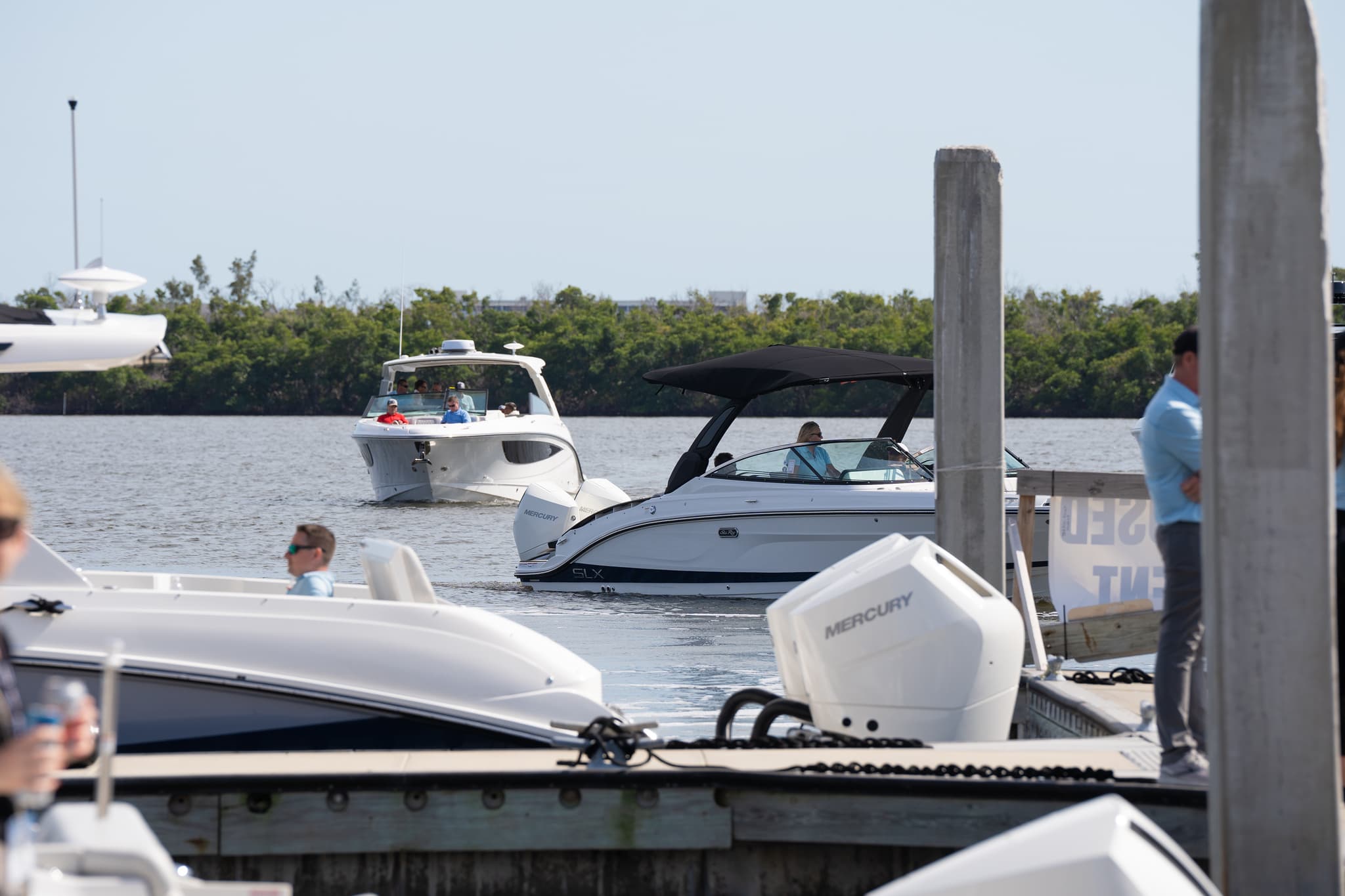
Navigation rules follow a clear hierarchy that determines which vessel has the right-of-way:
1. Vessels Not Under Command
Any vessel that cannot maneuver due to exceptional circumstances (engine failure, medical emergency) has the highest priority.
2. Vessels Restricted in Ability to Maneuver
Large commercial vessels, boats engaged in fishing with nets, or vessels performing maintenance work fall into this category.
3. Sailing Vessels
Power-driven vessels must give way to sailing vessels under most circumstances when the sailing vessel is operating under sail power alone.
4. Power-Driven Vessels
All motorboats, including Sea Ray's SPX, SDX, SLX, and Sundancer series, follow specific rules when encountering each other.
Stand-On vs. Give-Way Vessels
In any right-of-way situation, vessels are designated as either "stand-on" or "give-way":
Stand-On Vessel
The stand-on vessel has the right-of-way and should maintain course and speed. This consistency allows the give-way vessel to predict your movements and take appropriate action.
Responsibilities:
Maintain current course and speed
Keep a proper lookout
Sound appropriate sound signals
Take action if the give-way vessel fails to respond
Give-Way Vessel
The give-way vessel must take early and substantial action to avoid collision. This means making your intentions clear through obvious course or speed changes.
Responsibilities:
Alter course and/or speed early
Pass behind the stand-on vessel when possible
Sound appropriate sound signals
Continue avoiding action until completely clear
Common Right-of-Way Scenarios
Head-On Encounters
When two power-driven vessels approach head-on:
Both vessels should alter course to starboard (right)
Pass port-to-port (left side to left side)
Sound one short blast to indicate your intention
Crossing Situations
When vessels cross paths:
The vessel on the right has the right-of-way (stand-on)
The vessel on the left must give way
The give-way vessel should pass behind the stand-on vessel
Sound two short blasts if altering course to port
Overtaking
When one vessel overtakes another:
The overtaking vessel is always the give-way vessel
Pass with plenty of room to avoid wake impact
Sound appropriate signals based on your passing side
One blast for starboard pass, two blasts for port pass
Narrow Channels
In narrow channels or fairways:
Keep to the starboard (right) side
Smaller vessels should not impede larger vessels
Sound five short blasts if in doubt about intentions
Sound Signals for Navigation
Proper sound signals communicate your intentions to other boaters:
One short blast: Altering course to starboard
Two short blasts: Altering course to port
Three short blasts: Operating in reverse
Five short blasts: Danger or doubt signal
One prolonged blast: Leaving dock or blind turn warning
Special Considerations for Different Waters
Inland vs. International Waters
While basic rules remain consistent, some specific regulations differ between inland waters and international waters. Most recreational boating occurs in inland waters where these fundamental rules apply.
Local Regulations
Always check for local boating regulations and restrictions specific to your area. Some lakes and waterways have additional rules regarding speed limits, no-wake zones, and navigation patterns.
Building Navigation Confidence
Understanding navigation rules builds confidence in boating, allowing you to focus on enjoying your time on the water. Whether you're operating a compact Sea Ray SPX 190 for day trips or a larger Sea Ray Sundancer 370 for extended cruising, these rules apply universally.
Practice Makes Perfect
Start in less crowded waters to practice rule application
Take a boating safety course for hands-on learning
Practice sound signal timing and recognition
Study navigation charts for your local waters
Technology Aids Navigation
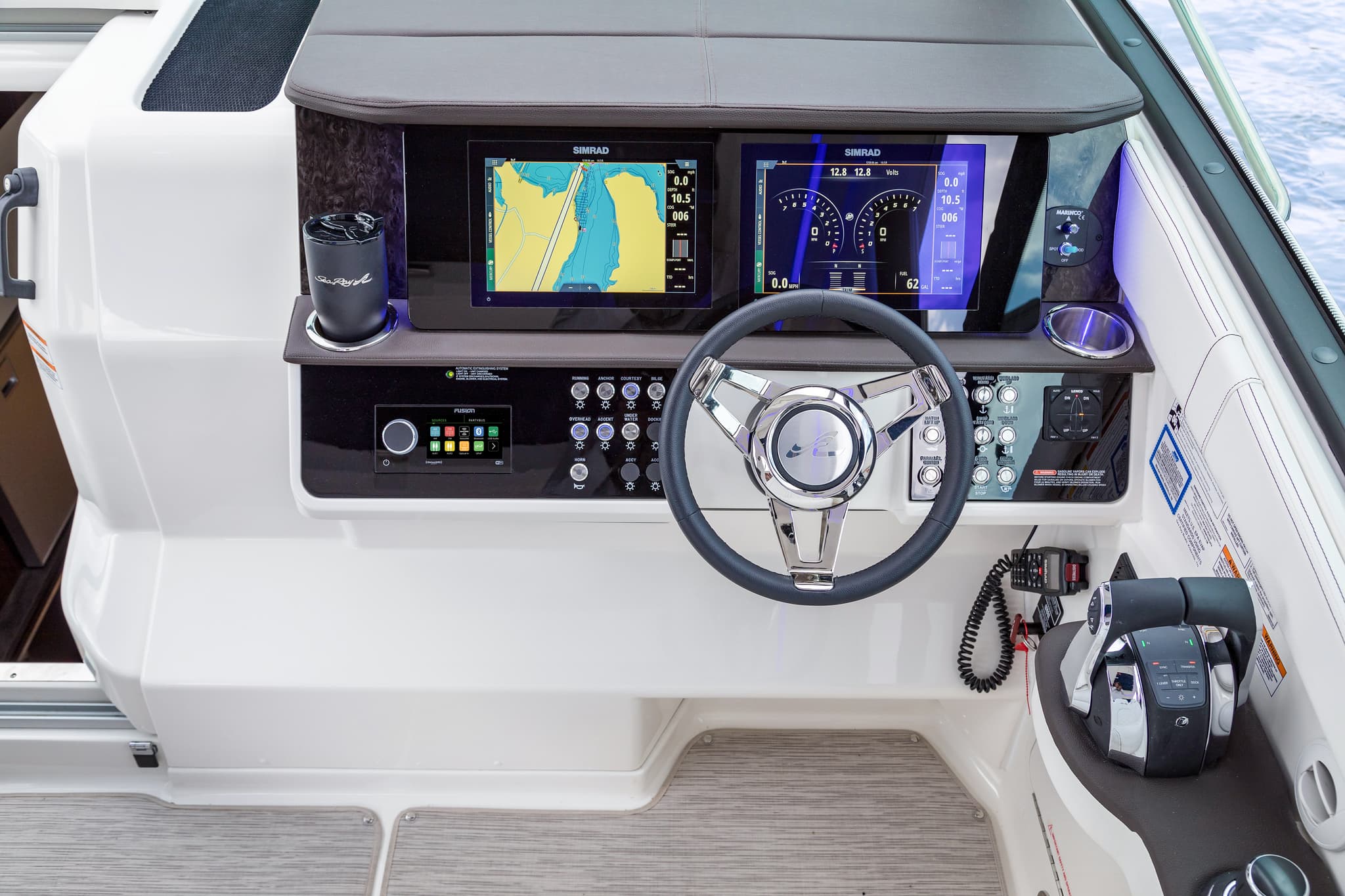
Modern Sea Ray boats feature advanced navigation technology that helps you maintain situational awareness. However, technology should supplement, not replace, your understanding of basic navigation rules.
When in Doubt, Take Action
If you're ever uncertain about right-of-way or another vessel's intentions:
Sound five short blasts to indicate uncertainty
Take early evasive action
Reduce speed or stop if necessary
Maintain visual contact with the other vessel
Remember, avoiding collision is everyone's responsibility, regardless of who has the technical right-of-way.
Common Navigation Mistakes to Avoid
Assuming others know the rules: Always be prepared to take evasive action
Making last-minute course changes: Early, obvious action prevents confusion
Ignoring sound signals: Always acknowledge and respond appropriately
Relying solely on technology: GPS and radar supplement but don't replace visual navigation
Forgetting about wake responsibility: You're responsible for damage caused by your wake
Conclusion
Mastering boating right of way rules creates safer, more enjoyable experiences for everyone on the water. These navigation basics provide the foundation for confident boating, whether you're exploring local waters in a Sea Ray SDX 250 or planning longer adventures.
Sea Ray crafts luxury sport boats, sport cruisers, and yachts that combine premium materials with exceptional performance, and understanding proper navigation ensures you can safely enjoy everything these vessels offer. With 65+ years of boat-crafting expertise, Sea Ray continues to build boats designed for life on the water.
Remember, good seamanship means being predictable, courteous, and always ready to avoid collision. When you understand and follow these fundamental rules, you contribute to a safer boating environment for everyone.
Ready to put your navigation knowledge to use? View our inventory to find the perfect Sea Ray for your next adventure, or contact our team to learn more about our complete lineup of luxury sport boats and cruisers.


